In our capitalistic society, we are accustomed to the idea that if a desire exists, a transaction can fulfill it. We live in an age of immediacy and customization. Yet, last week in Brussels, a strong coalition of voices standed to protect Human Dignity from the commodification of the Surrogacy market. A historic convergence of European politicians, UN experts, and civil society leaders gathered to deliver a stark message: babies cannot be bought, and women can’t be treated as objects of transactions.
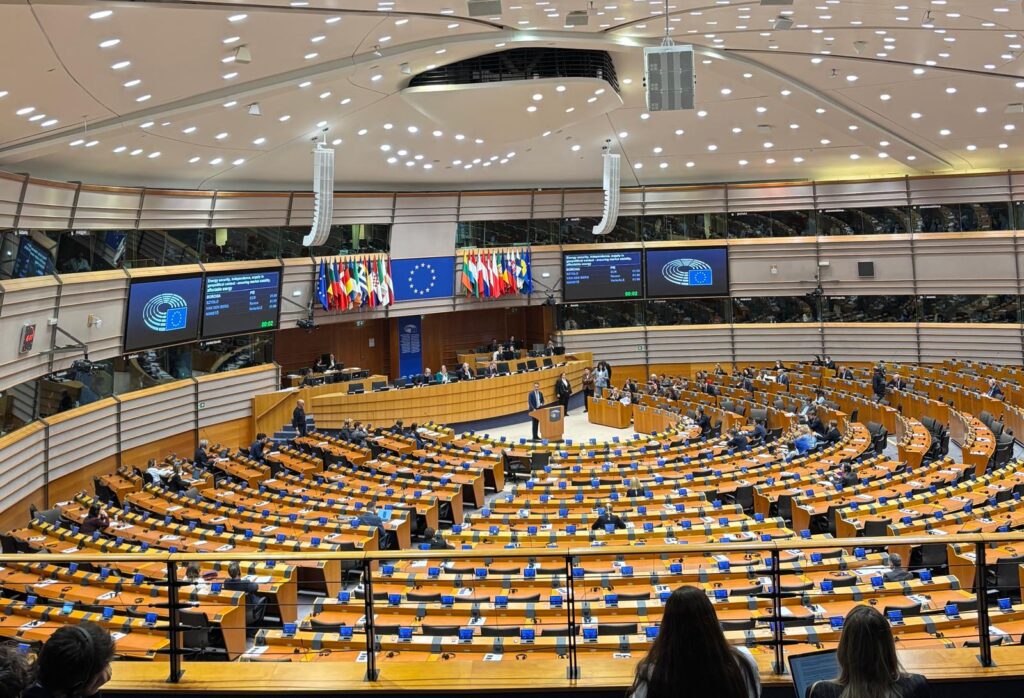
The event, titled “Surrogacy: An Ethical and Political Challenge for Europe,” hosted by Paolo Inselvini and Bert-Jan Ruissen from the ECR political group marked a decisive cultural turning point. It wasn’t merely a political debate; it was a reclamation of human dignity against the logic of the market.
Held just one week after the European Parliament’s historic condemnation of surrogacy in plenary, the event brought together Ministers, MEPs, legal scholars, and notably Reem Alsalem, the UN Special Rapporteur on Violence Against Women and Girls.
The Collapse of the “Altruistic” Narrative
For years, the global debate on surrogacy has relied on a distinction between “commercial” (paid) and “altruistic” (unpaid) surrogacy. This distinction is a veil used by marketers to obscure the reality of the industry.

Eugenia Roccella, Italy’s Minister for Equal Opportunities, stripped away this veneer during the conference. She argued that the narrative of altruism “collapses under substantial commercial profits flow through clinics, agencies, and intermediaries regardless of payment to surrogates”. Whether the woman is paid directly or not, the machinery around her is industrial. Roccella defined surrogacy not as a service, but as “a form of violence that breaks the most intimate link between a mother and her child”.
A Convergence on Human Rights
What made the Brussels conference historic was the “unprecedented institutional alignment”. The event brought together Members of the European Parliament from diverse political parties and NGOs from different cultural background.
Perhaps most damning was the testimony of Reem Alsalem, the United Nations Special Rapporteur on Violence Against Women and Girls. Moving beyond politics, she presented extensive analysis documenting that surrogacy involves “systematic human-rights violations”.
Alsalem’s report highlights a grim reality often ignored in glossy agency brochures:
- The exploitation and coercion of women.
- Severe health and psychological harm.
- The intentional deprivation of a child’s rights, specifically the right to know their origins and experience early maternal bonding.
This is not about denying parenthood; it is about protecting the vulnerable from structural violence.
The Voice of the Result
Policy debates often remain abstract until we hear from those most affected. At the heart of the conference was the testimony of Olivia Maurel, a woman born through surrogacy. Her words dismantle the idea that surrogacy is a victimless contract.
“Every surrogacy begins with a separation,” Maurel testified. “I am a child born of surrogacy—survival questions started early: Who am I? Where do I come from?”.
From an anthropological standpoint, Maurel’s experience underscores the trauma of “genealogical bewilderment.” When we treat children as the objects of a contract rather than subjects of rights, we strip them of their history before their life has even begun. Children must never become objects of commercial contract.
The Path Forward: The Nordic Model
So, what is the political solution? The consensus in Brussels is shifting away from regulation and toward abolition.
UN Special Rapporteur Alsalem proposed a concrete framework: the “Nordic model,” historically applied to prostitution. This approach criminalizes the demand—those who profit and purchase—while viewing the surrogate mothers not as criminals, but as victims who require protection and support.
As MEP Bert-Jan Ruissen stated, “There is a reason purchasing children, slavery, and human trafficking are punishable. Surrogacy belongs to that list”.
Conclusion: A call for Courage
Europe stands at a crossroads. As Pr. Tonio Borg, President of the One of Us Federation, noted, we should not fear being labeled “anachronistic” for defending the vulnerable. True progress does not mean expanding the market into the womb; it means recognizing the limits of what can be bought and sold.
The “One of Us” Federation is now calling on all Member States to adopt comprehensive abolition legislation. This is a battle for the soul of Europe. As MEP Paolo Inselvini framed it, we are defending the dignity of the human being “against the logic of the market”.
Human dignity is not negotiable.